What Order Should PPF, Ceramic Coating, and Paint Correction Follow?
The correct order is paint correction first, paint protection film (PPF) second, and ceramic coating last. The paint is washed, decontaminated, and inspected, then corrected to remove swirls and scratches. The surface is wiped clean of polishing oils, car PPF goes on the areas you want shielded from rock chips, and once the film adhesive has settled, a ceramic coating is applied over the film and the remaining exposed paint. Follow that sequence and every layer does its job. Change it and you risk sealed-in swirls, lifting film edges, or a coating that never bonds the way it should.
At Portland Pro Detail, our father and son team has been correcting, filming, and coating vehicles in Portland since 2011. As trained STEK ppf installers who handle every step under one roof, here is how we sequence a full protection package and why each step lands where it does.
The Correct Installation Sequence at a Glance
1. Wash and decontaminate the paint to remove dirt and bonded contamination.
2. Inspect every panel under bright LED lighting to map defects.
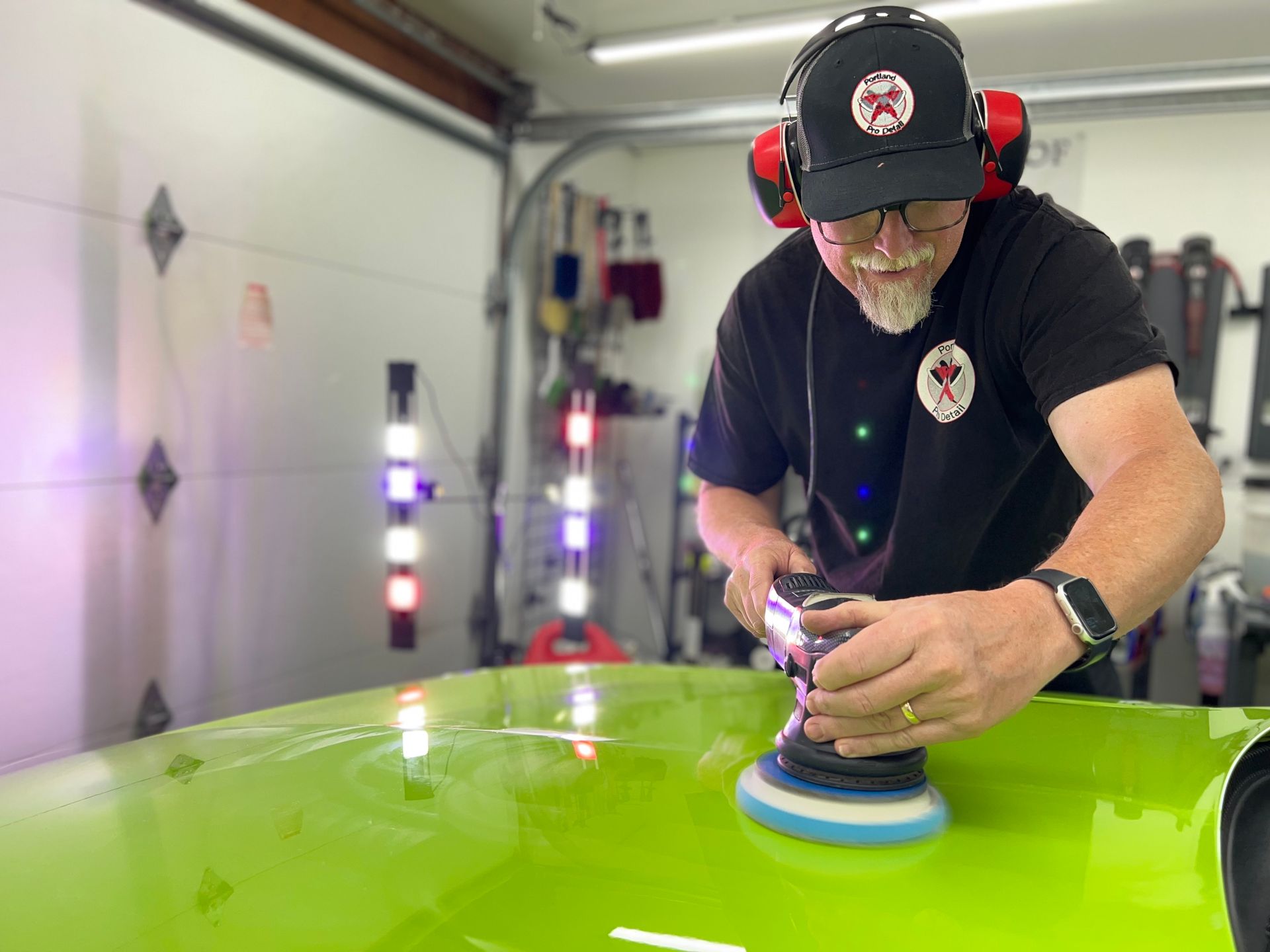
3. Correct the paint with machine compounding and polishing.
4. Prep the surface with a residue-free wipe-down so the film adhesive can bond.
5. Install PPF on the chosen coverage areas.
6. Let the film settle for at least 48 hours.
7. Apply ceramic coating over the film and all remaining paint.
8. Let the coating cure indoors before the car sees water.
Step 1: Wash, Decontaminate, and Inspect the Paint
Most problems start before a single product touches the car. Glance at the hood in the driveway and it looks fine. Tilt it under direct sun and you may see swirl marks, light scratches, and water spot etching from last winter. That is why our process starts with a prep wash and clay bar decontamination, which pulls out embedded rail dust, overspray, and tree sap that a normal wash leaves behind.
With the paint clean, we inspect it under a bright LED detailer's light and map every defect. That inspection decides how much correction the car needs, and it is the foundation every other step rests on. How long you plan to keep the vehicle and how particular you are about the finish both factor in. Even brand-new cars often arrive with light marring from transport and dealer washes.
Step 2: Correct the Paint Before Any Protection Goes On
Correction has to come before PPF and coating because both lock in whatever is underneath them. STEK DYNOshield film is a clear, 8-mil urethane layer, and once it goes down, any swirls or scratches below it stay there for the life of the film. A ceramic coating bonds directly to the surface it touches, so coating over swirls essentially preserves them. It is a lot like painting over a cracked wall: from across the room it looks fine, but you always know the cracks are there.
Our paint correction packages are built around how much defect removal your paint needs:
Level 1 is a one-step polish that targets 50%+ defect removal, starting at $650 for cars. Level 2 adds a two-step compound and polish with minor spot sanding for 75%+ defect removal, starting at $1,200. Level 3 adds 3,000-grit wet sanding and a three-step process for 90%+ defect removal, starting at $3,000. Crossovers, trucks, and SUVs are priced higher due to size.
Correction removes swirls, oxidation, haze, etching, and scratches that have not broken through to the primer. It cannot fix peeling clear coat or scratches that go down to primer or metal, which is another reason an honest inspection comes first. If you are not sure whether your car needs correction or just a good detail, our guide on paint correction vs. car detailing breaks down the difference.
Step 3: Prep the Surface So the Film Bonds
Correction gets the paint looking right. Preparation gets it ready for adhesion, and those are two different jobs. After polishing, the surface still carries polishing oils, residue, and fingerprints. A thorough wipe-down removes them so the film adhesive contacts clean clear coat, and edges, seams, and panel gaps are cleaned out so the film can wrap and seal properly. Skip this step and you invite bubbling, edge lifting, and premature peeling. This is also why the work happens indoors in a controlled shop, where dust and Portland's damp air are kept away from the paint.

Step 4: Install Paint Protection Film
With the paint corrected and prepped, the car ppf film goes on. We are trained and trusted installers of STEK film, including DYNOshield, a glossy 8-mil film with self-healing properties and a nano-ceramic top coat, DYNOmatte for a satin finish, and DYNOmight, a 10-mil film for vehicles that are driven hard, tracked, or taken off-road. STEK paint protection film is backed by a 10-year warranty.
Coverage is up to you. Our Level 1 package covers the front bumper, partial hood, and partial fenders. Level 2 adds the full hood, mirrors, and full front fenders. Level 3 adds rocker panels, door edges, door cups, A-pillars, and more, and Level 4 covers the full body. Many Portland commuters choose front-end coverage because that is where highway rock chips land.
Step 5: Apply Ceramic Coating Over the Film and Paint
Ceramic coating goes on last. If a coating is applied first, the film adhesive has to grip a slick, coated surface instead of clean clear coat, which can weaken the bond and lead to lifting edges. Coating over the film avoids that problem and gives you the benefits of both layers. As we explain in our post on applying ceramic coating over PPF, the film should be given at least 48 hours after installation so the adhesive can settle before the coating goes on. The film itself does not need paint correction first, and aggressive polishing can actually thin it.
Once applied, the coating covers the film and all unfilmed paint, and depending on the package, wheels and glass too. Our ceramic coating packages range from a single-layer Level 1 coating rated for up to 3 years to our Executive package, a dual-layer Fireball Dok Do coating rated for up to 10 years when properly maintained, which also includes full-body multi-step correction. Every package includes a free maintenance wash after application.
What Each Layer Actually Does
Car ceramic coating and PPF solve different problems. The film absorbs physical impacts like rock chips and road debris, which a coating cannot stop. The coating adds a hydrophobic, easy-to-clean layer that helps the surface shed water, road film, bird droppings, and tree sap. Together they cover both physical and chemical threats, which is why the combination is popular with our Tesla owners and other drivers who plan to keep their vehicles for years.
Step 6: Respect Cure Times and Aftercare
Patience protects the investment. After the coating is applied, the vehicle should stay indoors for at least 24 hours, with full durability developing over 48 hours, and it should not be washed during that window. Rushing back out into a Portland rainstorm or through a car wash too early can undermine both the coating and the film edges.
After that, the routine is simple. Hand wash with a pH-neutral soap and clean microfiber, and avoid touch car washes, which can dull the coating and mar the finish. Regular exterior detailing also limits contamination and helps preserve your STEK warranty.
What Happens When the Order Goes Wrong
Skipping correction means swirls are sealed under film and coating, and fixing them later requires removing the film and starting over. Coating before film puts the adhesive on the wrong surface. Rushing cure times risks haze, poor bonding, or lifted edges. None of these problems show up on day one. They creep in over weeks, and by then a clean redo costs far more than doing it right the first time.
Get the Full Protection Sequence Done Right at Portland Pro Detail
Layered protection only works when one team owns the whole sequence, and that is exactly how we work. At Portland Pro Detail, Greg and Joe inspect your paint, recommend the correction level it actually needs, install STEK film where you want impact protection, and finish with a ceramic coating, all at our shop at 4329 NE Killingsworth St, Unit A, in Portland. We are IDA certified, members of the Air Force One Detailing Team, and not a production line, so every car gets the time each stage requires.
We welcome drivers from across the metro, including Beaverton, Hillsboro, Tigard, West Linn, Happy Valley, Wilsonville, Gresham, Vancouver, WA, and Camas, WA. Call 503-444-7415 Monday through Friday, 8:30 am to 5:00 pm, or request your free quote online and we will map out the right order and package for your vehicle.
Frequently Asked Questions
Should ceramic coating go on before or after PPF?
After. The standard order is paint correction, then PPF, then ceramic coating over the film and remaining paint. Applying the coating first leaves the film adhesive bonding to a slick coated surface, which can weaken adhesion.
Do I need paint correction before PPF?
In most cases, yes. PPF locks in whatever is underneath it, so swirls, scratches, and haze remain visible through the film. Even new vehicles often benefit from a light polish before film goes on.
How long after PPF installation can ceramic coating be applied?
Film manufacturers typically recommend waiting at least 48 hours after installation so the adhesive can settle before a ceramic coating is applied.
Can paint correction be done after PPF is installed?
Not on the paint beneath the film. Correcting that paint means removing the film first, which is why correction comes first. If you ever need film removed, our guide on removing PPF without damaging factory paint explains the safe process.
How long does the full process take?
It depends on the correction level, coverage, and coating package. Our paint correction packages take one to three days and our coating packages take one to five days, plus time for the film to settle. We confirm the full timeline with your quote.
Is it worth doing correction, PPF, and coating on a new car?
For owners who plan to keep a vehicle long term, it is the most complete protection available. Correction removes delivery defects, PPF handles rock chips, and the coating makes the whole car easier to keep clean.
Portland Pro Detail Blog