How Professional Detailers Achieve Even Ceramic Coating Distribution Across Panels
Ceramic coating has become one of the most sought-after forms of vehicle protection available today, and for good reason. When applied correctly, it forms a tough, hydrophobic layer over a vehicle's paint that repels water, blocks UV damage, and makes the surface significantly easier to maintain. But getting that protection to perform at its best depends entirely on how evenly it is applied. At Portland Pro Detail, we follow a precise, structured process to ensure every panel receives a consistent coat from edge to edge. Here is how we do it.
What Makes Even Application So Important
Ceramic coating is a liquid polymer that bonds chemically with a vehicle's clear coat. Unlike a wax or sealant that sits on the surface temporarily, ceramic coating integrates with the paint itself and is meant to last for years. That permanence makes application accuracy non-negotiable. Any area that receives too much product can develop high spots, clouding, or uneven texture. Achieving consistent coverage across every panel, including doors, hoods, fenders, bumpers, and mirrors, requires the same level of care and discipline regardless of how large or small the surface being worked on is.
Surface Preparation Comes First
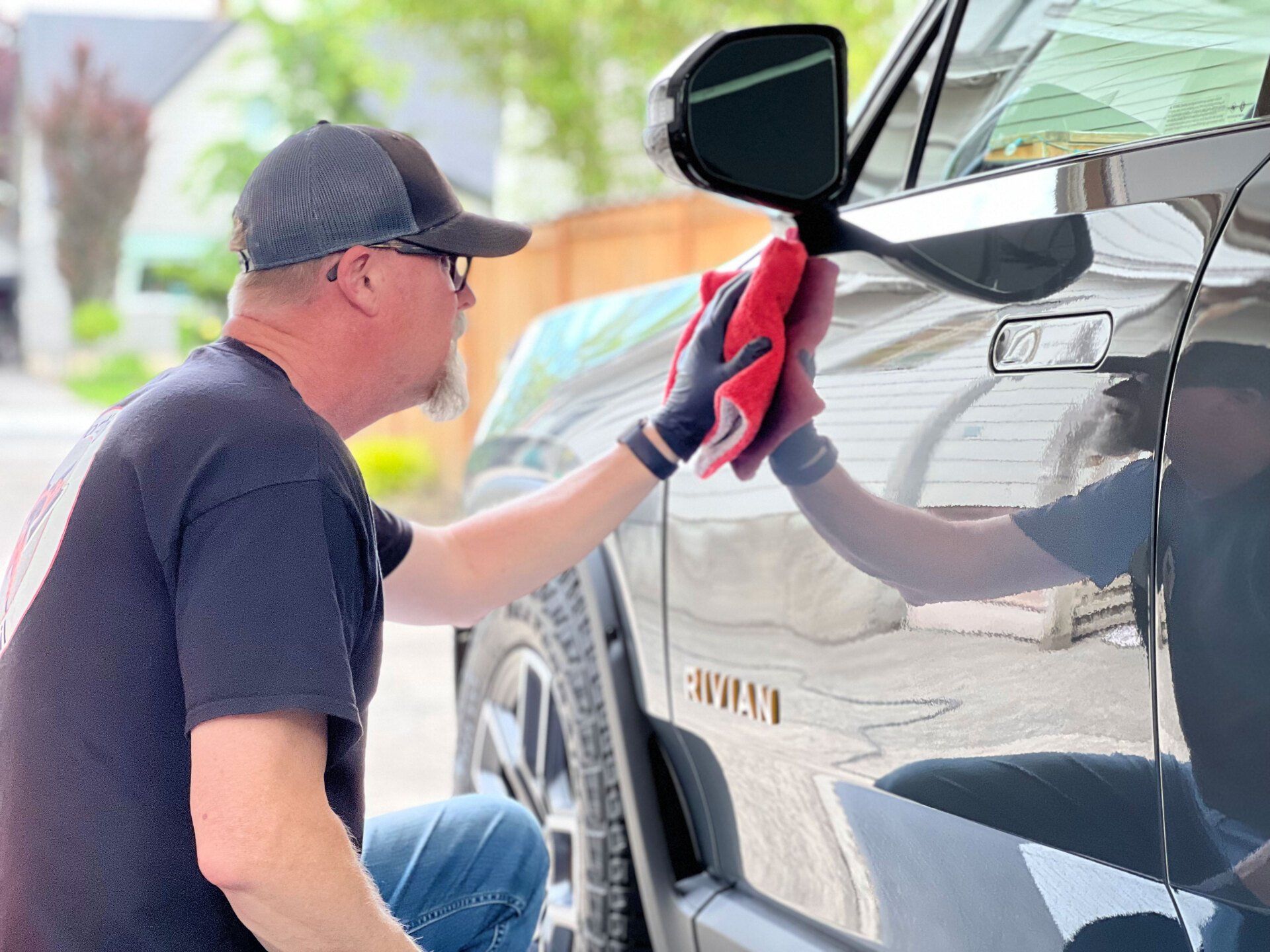
No ceramic coating can bond properly to a contaminated surface. Before any product touches the vehicle, thorough surface preparation is essential. Our team begins with a full decontamination wash to remove road grime, industrial fallout, and any residue that has built up on the paint. After washing, a clay bar treatment pulls bonded surface contaminants that washing alone cannot remove.
Once decontamination is complete, the paint is wiped down with isopropyl alcohol. This step strips away any remaining oils, wax residue, or polishing oils that could interfere with the ceramic coating's ability to bond to the clear coat. Isopropyl alcohol evaporates quickly and leaves no residue behind, making it the ideal final prep agent before coating begins.
If the paint has oxidation or surface defects that would show through the coating, paint correction is performed prior to application. Ceramic coating does not hide imperfections. It locks in whatever condition the paint is in at the time of application, so delivering a clean, corrected surface beforehand is a fundamental part of the process.
Masking Protects the Details
Before the coating is applied, trim pieces, rubber seals, plastic panels, and glass areas that are not being coated are carefully masked off. High-quality masking tape is used, smoothed fully along edges and curves to prevent any product from seeping underneath. This step ensures that ceramic coating does not accidentally bond to surfaces it was not intended for and that finished edges are clean and precise when masking is removed.
Application Technique
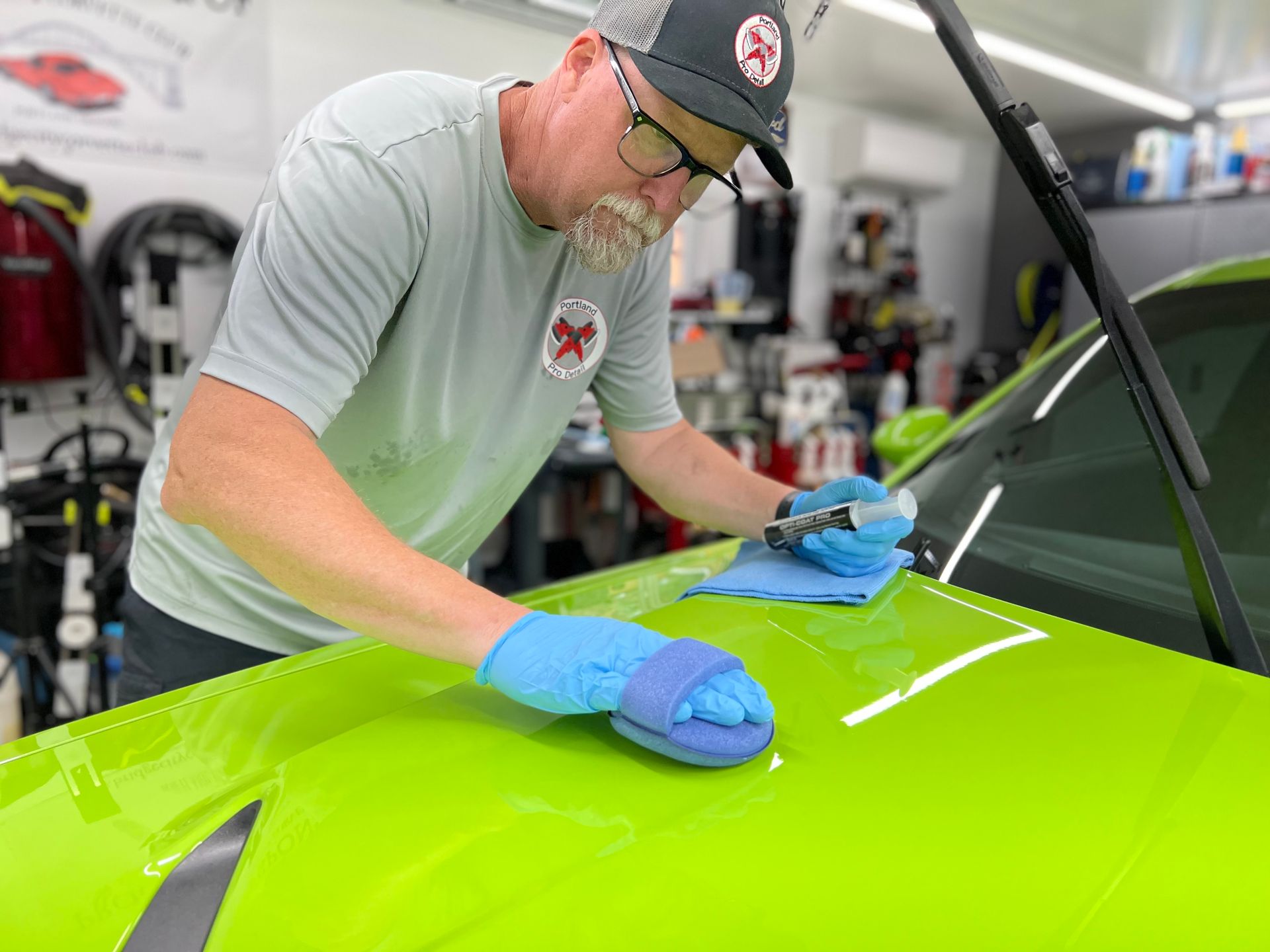
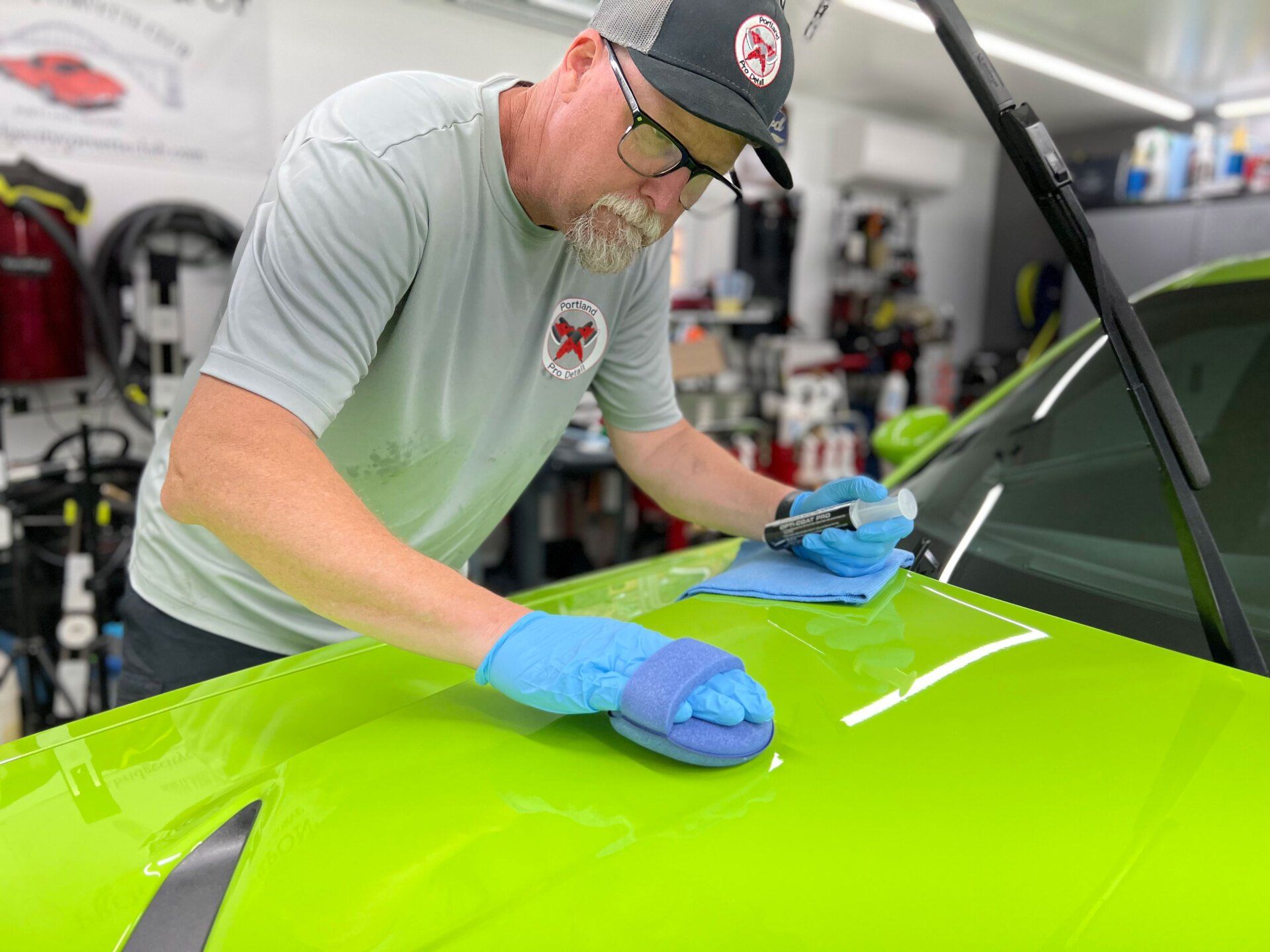
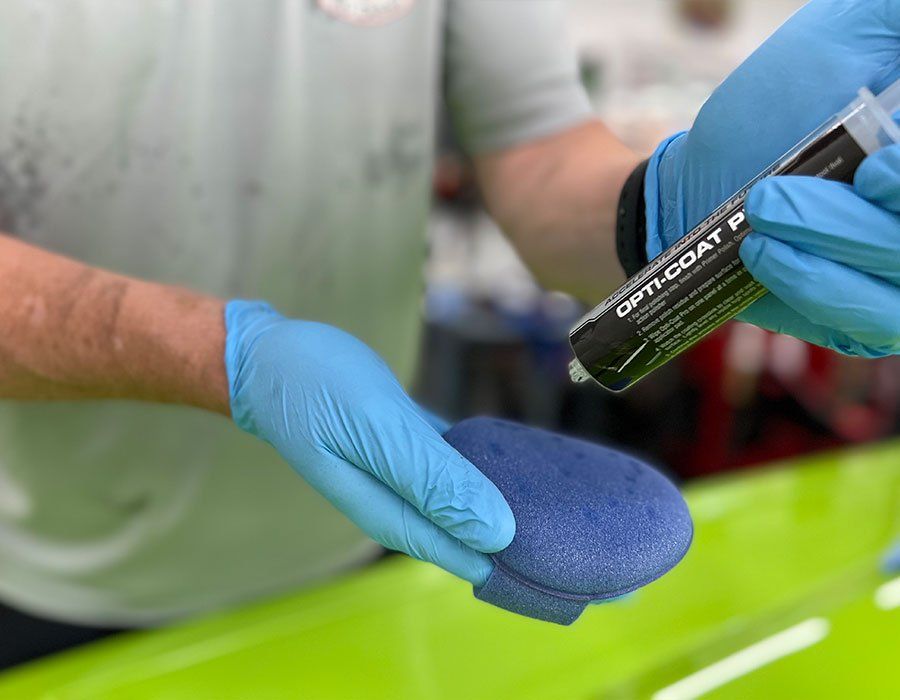
Ceramic coating is typically applied by hand using a foam or microfiber applicator wrapped around a small block. The coating is dispensed directly onto the applicator and then worked across the panel in overlapping passes, section by section. Keeping passes consistent and overlapping by roughly 50% ensures no area is skipped and product is distributed evenly across the full surface.
Applicators are kept at a consistent angle and pressure throughout each pass. The motion should be deliberate and unhurried. Rushing the application leads to uneven product distribution, and moving too slowly can cause the coating to begin flashing, or setting, before it has been properly leveled across the panel. Coating one panel at a time is the correct approach. Attempting to coat multiple panels at once before leveling increases the risk of high spots forming, particularly in direct sunlight or warmer shop conditions where flash times are shorter. Working panel by panel allows full control over the product before moving on.
Flash Time and Leveling
After the coating is applied to a panel, it needs a brief period to flash before it is wiped. Flash time refers to the window after application during which the coating begins to bond with the clear coat and transitions from a wet, slick layer to a slightly tacky state. The exact flash time depends on the specific product being used, ambient temperature, and humidity levels in the shop.
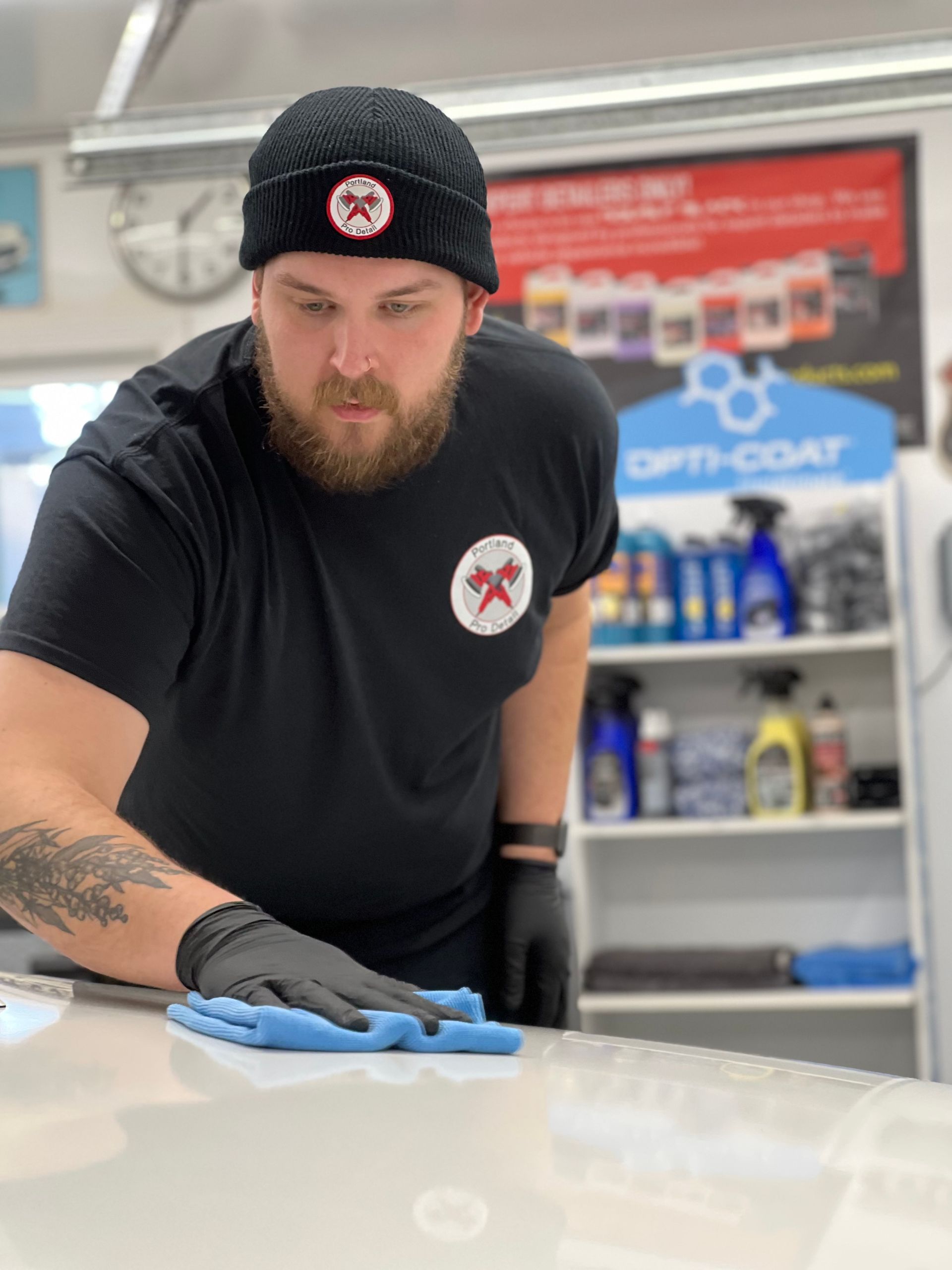
Watching for the coating to rainbow or shift in appearance under lighting is one way to identify when it is ready to level. At that point, a clean, soft leveling cloth is used to wipe away the excess product in smooth, even strokes. Wiping too early can smear the coating before it has begun to bond. Wiping too late makes the product difficult to remove and increases the likelihood of high spots.
Temperature and humidity in the application area matter significantly. Our shop maintains stable conditions during ceramic coating installations to ensure consistent flash times and reliable bonding from panel to panel. Extreme heat speeds flash time too aggressively, while high humidity introduces moisture that can interfere with how the coating bonds to the surface.
Addressing Edges and Contoured Panels
Edges, curves, and body lines require particular attention during ceramic coating application. Product tends to pool in recessed areas and can build up thicker along sharp edges if not managed carefully. Our team works these areas with a lighter hand, using a separate, dedicated cloth to remove excess product from edges before it has the chance to build up into visible high spots. Mirrors, door handles, lower bumpers, and any panel with a complex shape are treated individually rather than grouped together in a single broad application. Taking extra time in these areas ensures the protection is just as thorough and even as it is on the larger flat panels.
Curing and Post-Application Care
Once all panels have been coated and leveled, the vehicle enters a curing period. During this time, the coating continues to harden and fully bond with the clear coat. Initial curing typically takes 24 to 48 hours, during which the vehicle should not be exposed to water or contaminants. Full curing, where the coating reaches its maximum hardness and chemical resistance, takes longer and depends on the product used and ambient conditions.
Infrared curing lamps can be used to accelerate the hardening process in a controlled way without compromising the integrity of the coating. Our team uses this approach when appropriate to shorten curing time while ensuring the coating has fully bonded before the vehicle is returned to the owner. Masking is removed only after curing is complete to preserve the clean edges and prevent any peeling or lifting along trim lines.
Inspection Under Lighting
After curing, every panel is inspected under dedicated lighting to identify any high spots, low coverage areas, or residue that may have been missed during leveling. This final quality check is a critical step that ensures the coating is performing as intended across the entire vehicle before it leaves the shop. High spots appear as hazy or cloudy patches under strong lighting and can typically be corrected by lightly buffing the affected area with a soft cloth while the coating is still within the correction window. Catching these issues before the coating fully hardens is far easier than attempting to address them afterward.
Why Proper Technique Produces Better Results
Ceramic coating is an investment in long-term paint protection, and the quality of that investment is directly tied to how well the coating is applied. A product applied unevenly, over inadequately prepared paint, or in conditions that are not controlled will not deliver the years of protection that ceramic coating is capable of providing.
At Portland Pro Detail, our team approaches every ceramic coating installation with the same discipline and attention to detail that the process demands. From decontamination and paint correction through application, leveling, and final inspection, each step is carried out with the goal of delivering coverage that is even, thorough, and built to last. If you are ready to protect your vehicle's paint the right way, we are here to help.
Schedule a ceramic coating appointment in Portland, OR today!
Portland Pro Detail Blog